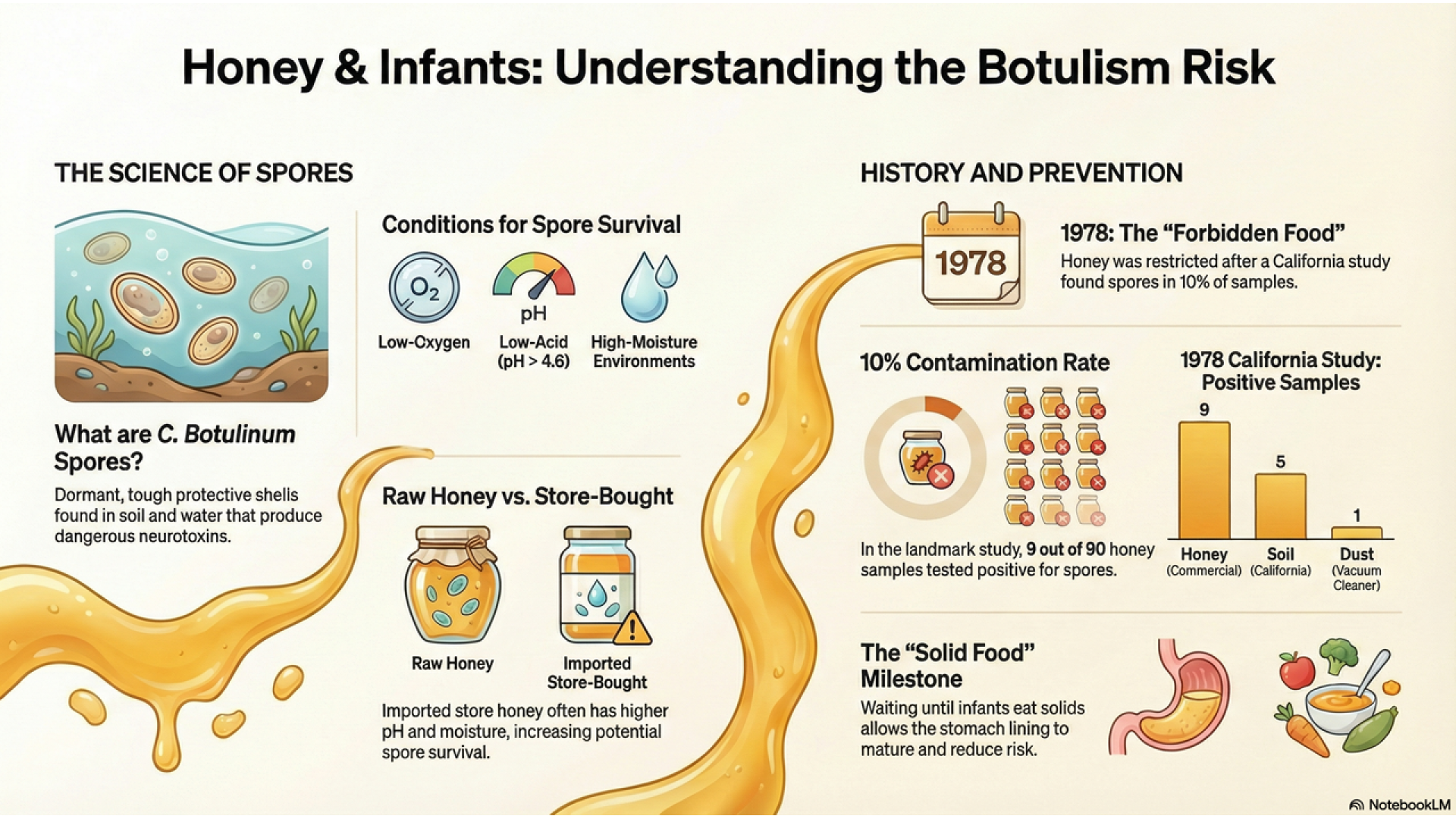

This text explores the historical and scientific origins of the warning against feeding honey to infants, tracing the concern back to a 1978 California study that linked the substance to rare cases of infant botulism. The author explains that Clostridium botulinum spores are commonly found in the environment, including soil and dust, but can also persist in honey—particularly imported or processed varieties with lower acidity and higher moisture content. While the risk of illness is extremely low, the spores become dangerous in the low-oxygen environments of a developing digestive system before a child transitions to solid foods. The narrative emphasizes that while panic is unnecessary, parents should remain informed about how honey's pH levels and processing methods affect safety. Ultimately, the source suggests that natural, high-acid honey is less likely to harbor spores, yet it advises following medical guidelines to avoid all sweeteners for babies until their stomach linings mature.